-
Glass cut to measure
I select the model
- Glass panels by brand
-
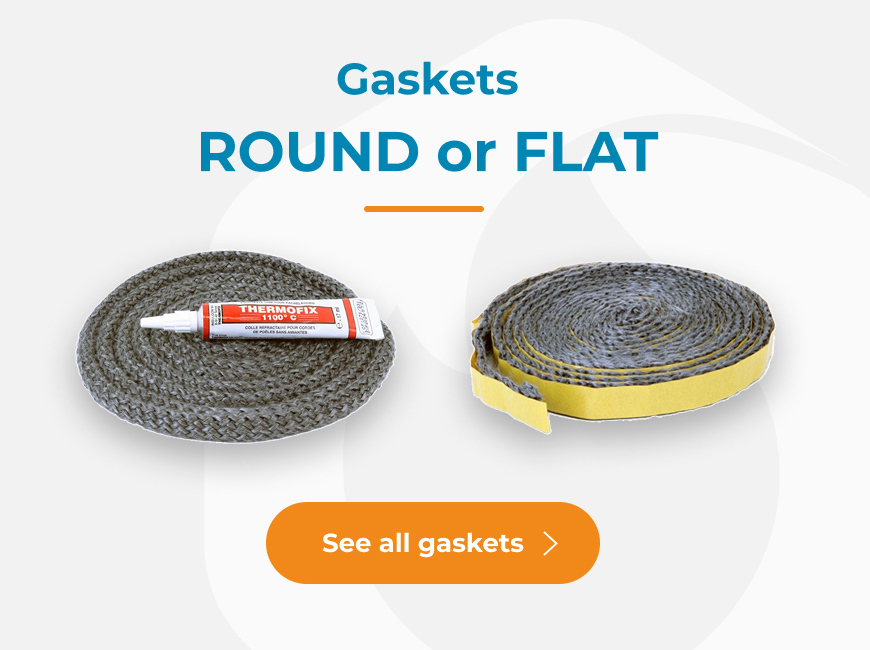
Seals
How do I find my gaskets?





















I search for my window
or
I order
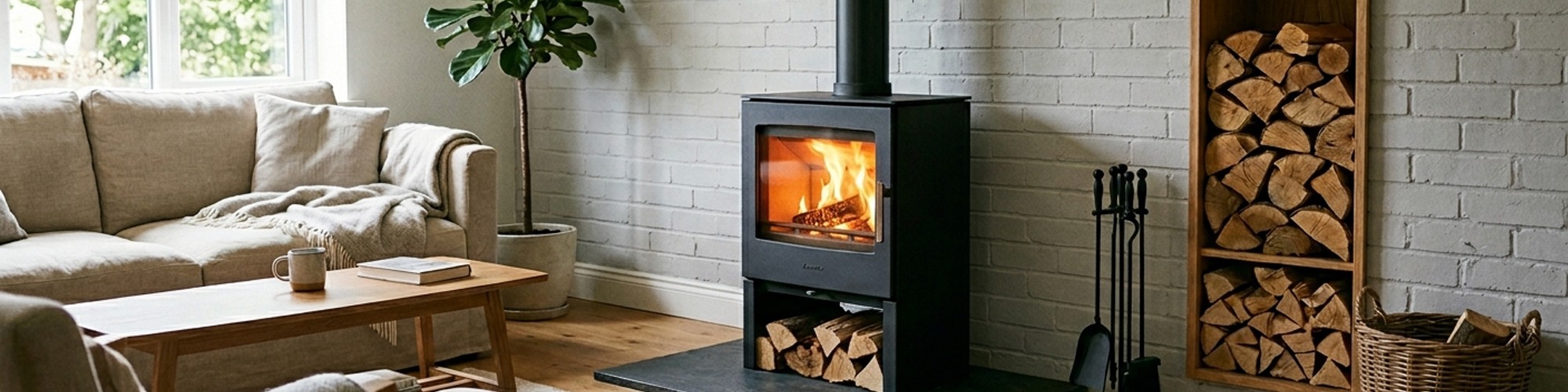
Soot remover : which product should you choose to remove soot from your fireplace ?
On a wood-burning stove, insert or open fireplace, anti-creosote powder is suitable both for regular maintenance and for treating a flue that is already coated. The chimney sweeping log is ideal for a quick, simple one-off treatment, while pellet stoves have their own chimney cleaning pellets. None of these products replaces mechanical sweeping by a professional, which remains a legal requirement.
Creosote: how to recognise it and why it forms
Creosote (known in French as "bistre") is a black, sticky, tar-like deposit. It appears when flue gases cool and condense on the walls of the chimney flue. This is often described as the chimney "tarring up". Unlike soot, which is dry and powdery, creosote clings and hardens. Over time, it can turn into glazed creosote, a black, vitrified residue that a chimney sweep's brushes simply slide over.
Several signs should put you on alert: a tarry smell that lingers after the fire has gone out, stains on the walls, and a weakening draught. A stove insert glass that blackens very quickly is another clue, as it is often caused by the same issues.
These causes are well known: incomplete combustion, damp wood, poor draught, an incorrectly sized flue or an appliance left smouldering on a low setting for hours. The Agence Qualité Construction (AQC) points out that a stronger draught limits the cooling of flue gases, and therefore reduces condensation and creosote build-up.
This deposit is more than just a nuisance. Creosote is flammable and is the leading cause of chimney fires. According to the AQC, a chimney fire is precisely the ignition of the condensates and combustible soot that have built up in the flue.
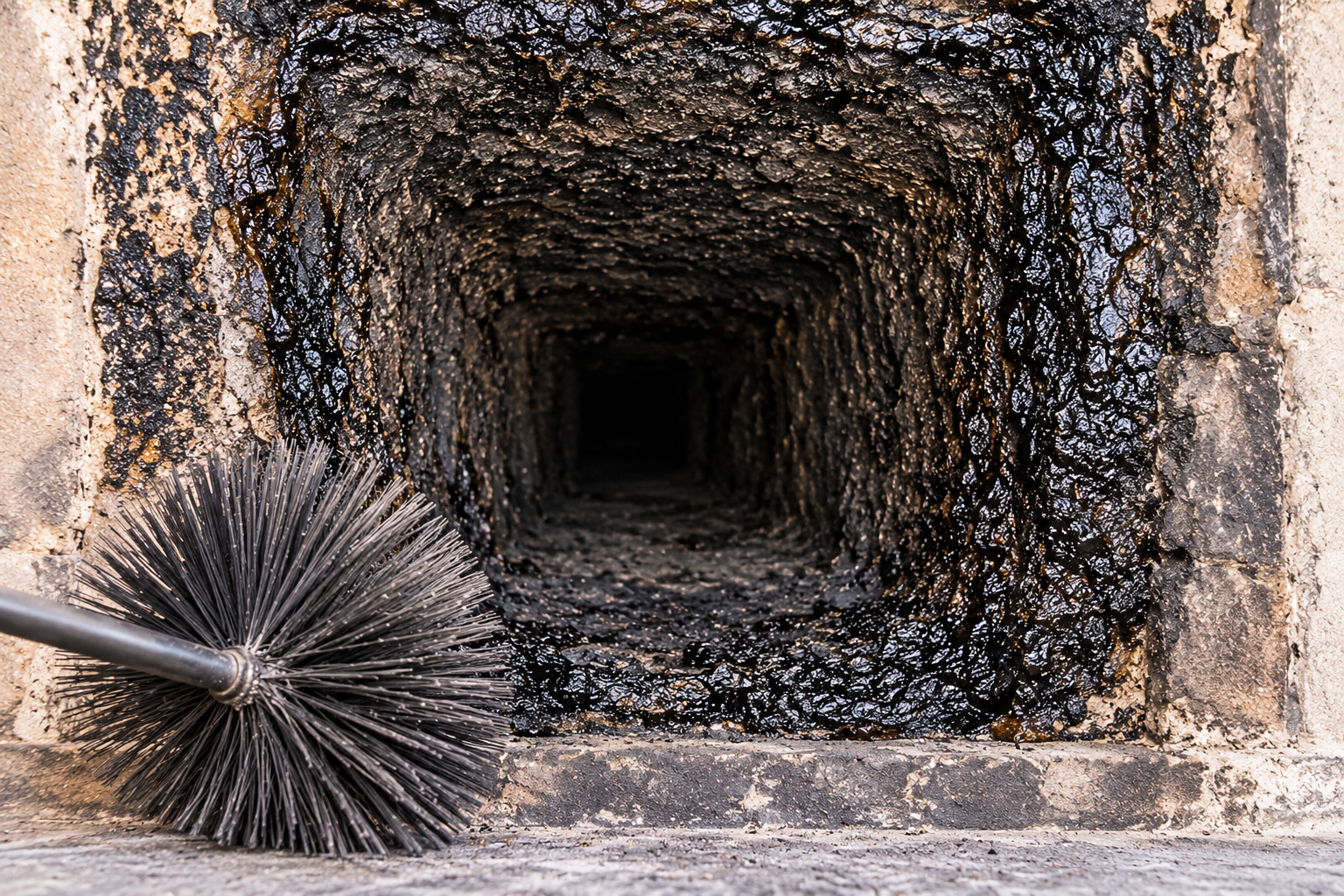
Powder, log, pellets or liquid: which anti-creosote product should you choose?
Start by choosing according to your appliance. For a wood-burning stove, an insert or an open fireplace, powder is the most flexible solution, suitable for both prevention and treatment. A chimney sweeping log is ideal for a one-off treatment, with no dosing required. For a pellet stove, use sweeping pellets designed for this type of appliance.
All these products work by catalysis: carried up by the flue gases, their components trigger a chemical reaction that dries out the creosote and makes it brittle. The deposits then come away and either fall into the firebox or are removed at the next sweep. This is known as chemical chimney sweeping. However, a heavily clogged flue will not come clean with a simple treatment.
| Product | Appliance and use | Directions and limitations |
|---|---|---|
| Powder | Wood-burning stove, insert, open fireplace. Preventive and curative. | Sprinkled onto hot embers with the draught reduced. Annual dose in one go or small regular doses, depending on the product. |
| Chimney sweeping log | Wood-burning stove, insert, open fireplace. One-off treatment. | Burnt like an ordinary fire in a well-heated flue. Does not remove the most stubborn deposits. |
| Sweeping pellets | Pellet stove. Regular maintenance. | Mixed with the pellets, at the frequency recommended by the manufacturer. |
| Liquid | Varies by brand. | Directions specific to each product: follow the instructions. |
To decide quickly, start from your situation:
- Wood-burning stove, insert or open fireplace with a lightly sooted flue: powder for regular maintenance.
- Same appliance, but a tar smell or reduced draught: curative powder treatment, followed by a visit from the chimney sweep.
- Want a simple solution with no dose to measure: chimney sweeping log.
- Pellet stove: dedicated sweeping pellets.
- Thick deposits, glazed creosote, a strong smell that won't go away or a previous chimney fire: call a chimney sweep for mechanical creosote removal.
Anti-creosote powder, for regular maintenance or remedial treatment
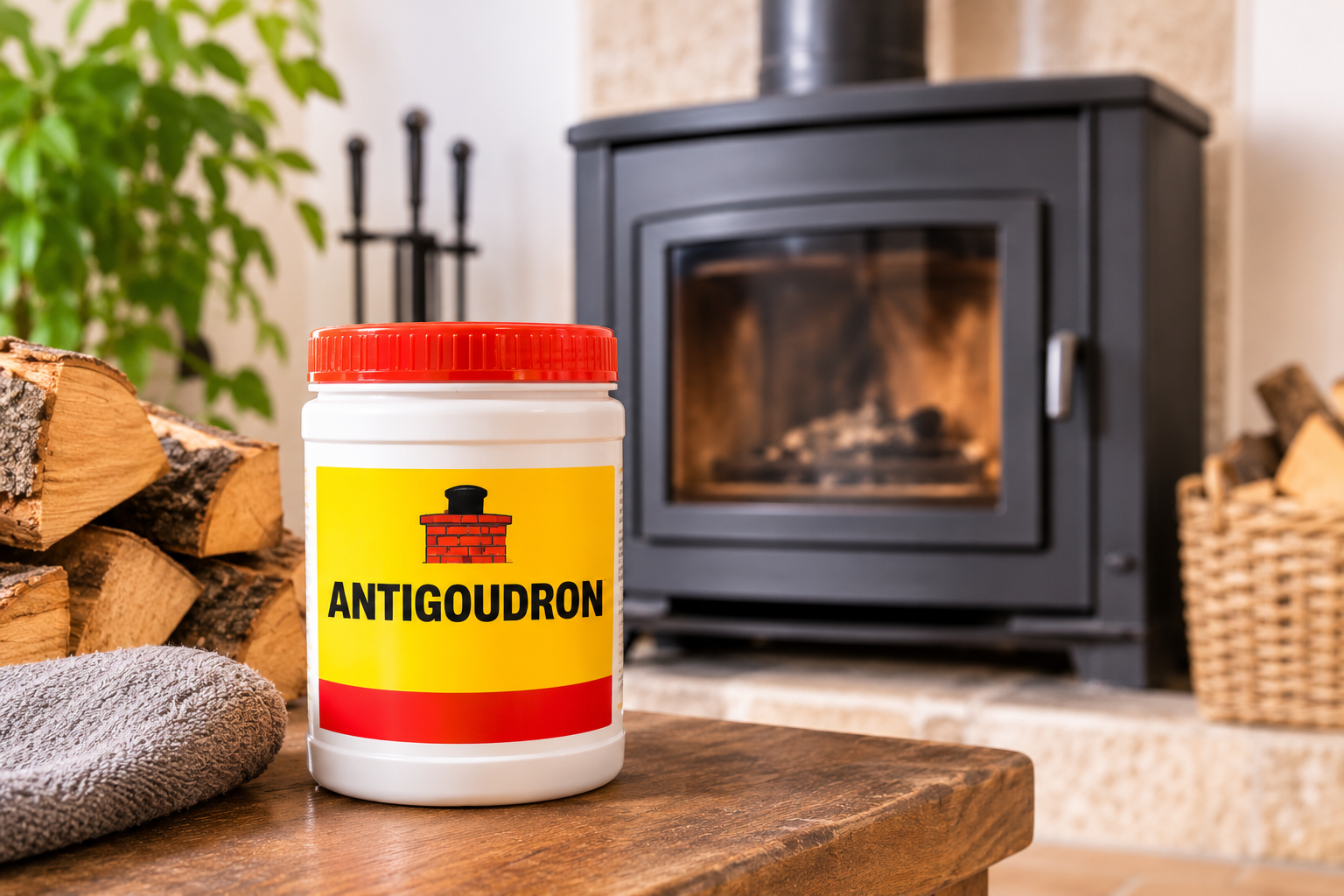
The powder is sprinkled onto hot embers. You then reduce the air supply, without shutting it off completely, so that the smoke carrying the product passes through the flue. Depending on the formula, it is used in a single application once a year (a whole 1 kg sachet, for example) or in small doses throughout the season. It typically combines ammonium chloride and metal salts, hence the warning " Dangerous, follow the precautions for use " on the packaging. Some powders are also said to treat glazed creosote. Our 1 kg preventive anti-creosote cleaner for chimney flues can be used both as a preventive and as a remedial treatment, on various types of appliance.
The chimney sweeping log, for an occasional treatment
This is the simplest solution: you simply burn it like an ordinary fire. Its active agents only work properly in a hot flue, and MAIF recommends adding it after at least two hours of burning. Its limitation is clear: it will not remove the most stubborn creosote deposits, and there is no guarantee that the flue will be cleared along its entire length.
Chimney-sweeping pellets for pellet stoves
Pellet stoves also leave deposits in their flue. There are chimney-sweeping pellets designed to be mixed in with your fuel pellets; one manufacturer recommends using them every two weeks. Never use a powder or log designed for wood-burning appliances in this type of stove without the manufacturer's approval.
Liquids: a less common format
Liquid anti-tar treatments are also available. Instructions for use vary from one brand to another, so read the leaflet carefully. For wood-burning stoves, we generally steer our customers towards powder, as the dose is easy to adjust for both preventive and remedial treatment.
How to use a creosote remover on a wood burner or open fireplace, step by step
-
Light a hot fire to heat the flue thoroughly: a product used in a cold flue won't work properly.
-
Wait until you have a good bed of embers, then pour the dose stated in the instructions directly onto them, without touching the powder with bare hands.
-
Close the door and reduce the air supply without shutting it off completely.
-
Ventilate the room during the treatment.
-
Once the appliance has cooled, remove the ash and any pieces of creosote that have fallen into the firebox.
While you're at it, take care of the glass too: if it blackens quickly, the problem often stems from the same causes as creosote. Our advice on how to clean your stove or insert glass without damaging it will help you avoid scratches. You'll find the powder and glass cleaning products in our cleaning and maintenance section.
Safety precautions to follow
Chimney sweeping powder carries the label "Danger": take it seriously. Wear gloves, avoid any contact with skin and eyes, and do not breathe in the powder when pouring it. Never exceed the recommended dose, as using more does not clean any better.
Store the sachet closed, in its original packaging, in a dry place and out of the reach of children and pets. Do not mix it with any other cleaning product.
What a creosote treatment won't do
It doesn't replace the chimney sweep. Decree no. 2023-641 of 20 July 2023 brought chimney sweeping into the French Public Health Code: it must be carried out by a qualified person (article R.1331-22) and each visit must be followed by a certificate (article R.1331-23). Chemical product manufacturers even state this in their instructions: their product is to be used in addition to mechanical sweeping.
The frequency is set locally, by the departmental health regulations or by local order. The standard model requires two sweeps a year for wood, one of which must be during the heating season. Check with your town hall or prefecture, and read our article on how many times a year to service your fireplace insert.
As far as insurance is concerned, only mechanical sweeping by a professional counts. The "certificates" sold with some sweeping logs are a manufacturer's commercial guarantee and carry no weight with insurers, as Macif and Groupama point out. Finally, a flue with heavy creosote build-up requires mechanical creosote removal by a professional.
Limiting creosote build-up
The best product is the one you need least. Burn dry wood: damp wood cools the flue gases and encourages condensation. Start with kindling to bring the temperature up quickly.
Avoid leaving the appliance smouldering all night with the air supply almost closed: running at low output like this is one of the main causes of creosote. If the draught seems weak despite good wood, talk to your chimney sweep, as an incorrectly sized flue may be to blame.
Frequently asked questions
What product removes creosote?
For a wood-burning stove, insert or open fireplace, use a chimney sweeping powder sprinkled over the embers. For a pellet stove, use sweeping pellets. A heavily clogged flue needs professional creosote removal.
Does a chimney sweeping log replace chimney sweeping?
No. It complements mechanical sweeping, which is still compulsory, and its certificate is worthless to your insurer.
Chimney sweeping log or powder: which should I choose?
The log is simpler for a one-off treatment. Powder can be measured out and is better suited to regular maintenance or a corrective treatment.
Can I use a creosote remover on a pellet stove?
Yes, as long as you choose a product designed for pellets, usually sweeping pellets mixed in with the fuel.
How do I remove soot from a fireplace?
In the firebox, brush and vacuum away the deposits once the appliance is completely cold. For the flue, only mechanical sweeping removes soot properly.
How do I remove a fireplace insert?
An insert is heavy and connected to the flue. Removing it is a job for an installer or chimney sweep, who will know how to disconnect it without damaging the flue.
Key points to remember before you buy
Choose the product to suit your appliance, use it on a hot flue at the correct dose, and keep both of your appointments with the chimney sweep. To maintain your wood-burning stove, insert or fireplace between sweeps, our 1 kg preventive anti-creosote powder is a good place to start: easy to use and inexpensive.

Loading...
check_circle
check_circle